
Music
Video Friday: Take it back to the beach


Shekhina and Kyle Deutsch are ex-Idols (eliminated) contestants who are breaking ground in the music industry mainly because of their biggest collaborative success in the form of their single Back to the beach. Shekhina is currently studying Music at Afda and Kyle is a chiropractor; These two gifted souls represent the city of Durban and it is only fitting that they came together and created such a tranquil escape from the hustle and bustle of the city. Check out the video below.

Music
From SoundCloud to Timeless Blues: KaeB on Dimakatso, Flex the Ninja, and Making Music Without Limits


It’s the beginning of a broke summer. I’ve just touched down from school for the semester, walking the dusty roads of my hood with a bag too big for my shoulders and sneakers already losing their glow. The latest lingo, the music, the aura — I’ve brought some of the city with me, but somehow the township always has its own rhythm.
Somewhere between the whistles of kids and the chatter of neighbours, a deep bassline spills from a tin shack, carried by 6×9 speakers and a hot sub. The groove is unmistakable: a bit of Kwaito, house and vernac, blending into the makings of a soundtrack to the Kasi.
Passing familiar streets, I think of that high school Betty who never noticed me, her pitbull of a father always chasing strays off the yard.
This is exactly what Dimakatso, KaeB’s latest track, reminded me of at first listen. It carries Kwaito’s DNA but moves with a jazz flair, noir soul, and a timeless bounce. To unpack it, I sat down with KaeB to talk about the story, the collaboration with Botswana’s Flex the Ninja, and how future-facing tools like AI shaped the rollout.
The Story Behind Dimakatso
Q1. How did Dimakatso come about, and how does it reflect where you’re from or the kind of sound you usually make?
KaeB: Dimakatso is one of those stories – familiar and almost cliché if you’ve lived long enough. You get stood up, next morning it’s “you’re gonna hate me.” It’s just another entry in the blues journal. I don’t make heartbreak music, I document moods. And this one had that calm ache to it. The beat carries that bounce, that noir soul & funk, that sofistikasi flair. It’s Joburg at night — a little sharp, a little soft, always in motion. That’s where I’m from. That’s the frequency.
On Working with Flex the Ninja
Q2. You teamed up with Flex the Ninja from Botswana — how did that connection happen, and how did your styles align?
KaeB: Flex and I go way back to the SoundCloud era. We met through SoundCloud. He’s not just a beatmaker; he’s a full-spectrum creative — editor, dancer, musician, sound guy. We built that trust over the years. He runs Shinobi Sound Studios, so beyond mixing and mastering, he knows when a record needs that extra touch. If he hears something and lays it down, we run it back. If it works, it stays. That’s the synergy — quiet, sharp, efficient. He co-produced Dimakatso.
On Audience and Reception
Q3. What surprised you about how people have received the track so far?
KaeB: If anything, I’m surprised people are still checking for my music like that. That’s always humbling. But the music itself? I knew it was fire. So seeing the love now just confirms what I already felt: we made something timeless.
Who Dimakatso is For
Q4. Who do you hope this song reaches? Any specific audience or vibe you’re hoping it connects with?
KaeB: People who move with taste. Lovers, drivers, thinkers — anyone with a bit of story behind their eyes. If you appreciate detail, if you bounce to the subtle stuff, this one’s for you. It’s head-nod music. It’s high-thread-count blues.

On Using AI for the Rollout
Q5. You’ve taken a unique approach with the rollout, especially using AI. How did that come together? Would you say it’s a first of its kind in SA music?
KaeB: Could be. But honestly, for most of us in the team — we’re trained digital artists. So it made sense to use what we’ve already got in our hands. We didn’t need a huge budget, just the right vision. AI helped us imagine beyond what money allows. We trained the tools on the world we know — noir films, elegance — and layered it with real design skill. It wasn’t about hype. It was about making something timeless from the ground up. Limitless, from a laptop.
Closing Reflection
This isn’t heartbreak music. It’s taste, history, and elegance in one. Dimakatso belongs on your playlist.
Stream the song everywhere now.


I am astounded by the contrast between the temporary and the permanent, such as love and marriage. We often experience permanent things with contempt, perceiving them as safe and secure, dull & boring, while simultaneously being drawn to the fleeting and uncertain nature of the temporary, like a moth to a flame. Are we realistic, or have our septic wounds made us feel inadequate for what’s permanent or long-term? In my thirties, I have often pondered the ideas of love and marriage, swirling them within the chalice of my mind, only to arrive at a drunken stupor of confusion—a hangover from an idealised relationship between the wonders of love and marriage.
This brings me to the central question: Why did Riky Rick create this body of work? What was happening within the labyrinth of his musical talents and the fissures of his mind? Why title the EP ‘Love & Marriage,’ and why at that time?
This cinematic EP from the forgotten days of the Blogspot era—where even Kaffein Magazine has its roots—weaves textures, notes, scents, and emotions around the concept and perhaps the reality of love and marriage, as perceived by the late Riky Rick during that time.
Before delving further into why I believe this album deserves a revisit, consider its luminance, artful storytelling, and its connection to vulnerability.

- ‘Can I See You’ This song feels like a honeymoon phase of an impending heartbreak. The kicks and snares are reminiscent of classic hip-hop, accompanied by melodies that fit joyously into the beat, creating excitement, desire, and optimism. The beat bears a heavy sample from the 1970s Jackson 5 hit ‘Can I See You in The Morning,’ which is perhaps indicative of wishful thinking, followed by a sound bite from the 2006 movie starring Vince Vaughn and Jennifer Aniston—‘The Break-Up.’ It’s a beat full of warmth, joy, and excitement for things to come. VERY REMINISCENT OF RJD2’s ‘Dead Ringer’ album.
- ‘Your Love Is…’ This track offers an early glance into Riky’s experimentation with singing and is reminiscent of Andre 3000’s ‘Pink & Blue,’ with experimental synthesizing of the voice adding more texture—especially at 2:29, where a vibrant love transforms into a moody purple hue, creating a union of two emotively different vibes: the blues and the reds, and everything in between.
- ‘Another Day’ This track sounds like an inner-city park in the centre of Johannesburg, with voices, laughter, birds, and the bustle of the city bedding the vibey hip-hop beat. The sounds of car radios and stations being switched create a medley of sounds as it progresses to the end. The beat is stripped layer by layer as the sun sets behind the towering buildings, and the streets become empty of the chords that once were.
- ‘The Tyson Story’ This song is, personally, by far the most accessible story. The story is real and extremely vulnerable, especially if you can contextualise, relate, or perhaps empathise. In retrospect, this song centres around bullying, being belittled in ways you never thought possible. The mixture of sensitivity and pain builds a monster. This story is told with various sound bites from Mike Tyson interviews, who—as the piano intensifies—continues to tell his story, beckoning the deep questions of identity: “Who am I?” In many ways, it could be a reflection of Riky’s story, how Rikhado Makhado became Pretty Rick, Riky Rick, and the list goes on.
- ‘For You Again’ The crackle of vinyl cushions the nostalgic and soulful vocals, making this feel like a warm winter with family. A nod to the 70s kind of love—a gentle, honest, and galactic type of love.
- ‘Jozi City Lights Part 4’ This easily progressive track leans into a jazzy sound that revolves around a rift of strings, percussions, and keys. The sirens break the whimsical trip, dampening the mood and taking us out of the groove—just another Jozi night with police sirens painting the night.
- ‘Floating Away’ This track is another fun exploration of vocals, in a style and projection that was yet to become familiar as his career evolved. It is chilled, loopy, and addictively monotonous, creating an immediate feeling of familiarity that will have you nodding along and dialling in.
- ‘Touch of God’ This track bears an abstract beat with melodic reversed vocals and instruments that are perhaps symbolic of a state of dwelling in the past. It ends with an obscure yet cinematic ride into conversations about God and faith taken from Pulp Fiction. The beat periodically switches to unreversed vocals, which seem brighter and full of hope, signalling the beginning of transcendence from what is holding one back. It’s a search for meaning in God to soothe the pains of the flesh—a conversation between two people or perhaps between self…
So why the title ‘Love and Marriage’? Is it influenced by his relationship with music? Could it be life experiences or a story of his becoming? I guess that is for you to answer.
This Ep is one of the most slept-on offerings that we’ve heard in a while. Download it on the link below, before someone removes it.
Download here.

Aluwani Silas Thovhakale, known by his stage name H’ & Them (Hermit & Them), hails from Thohoyandou, Limpopo. As a solo artist, he embodies an experimental approach to music, constantly pushing the boundaries and defying categorization in both his mother tongueTshivenḓa and English. The Hermit’s ever-evolving sound is “a captivating chimaera” that keeps his listeners intrigued and never quite knowing what to expect.
His latest album, titled “Home In A Bit,” was released on May 10, 2023. It presents a mesmerising fusion of genres, skillfully blending elements from Alternative-Urban/Indie, Hip-Hop/Rap, Melancholic Indie-Folk, Alternative R&B, and Lofi. Within this sonic tapestry, H’ & Them delves into poignant themes of grief, homesickness, longing, and nostalgia.
The album’s inventive and offbeat soundscapes, along with its thematic coherence across eight tracks, propelled it to success. The track ‘Home In A Bit’ climbed the ranks and secured a place in the Top 10 of the Apple Music Alternative Music Charts, reaching an impressive peak at number 7. Let’s take a closer look at each of the eight songs on the album.
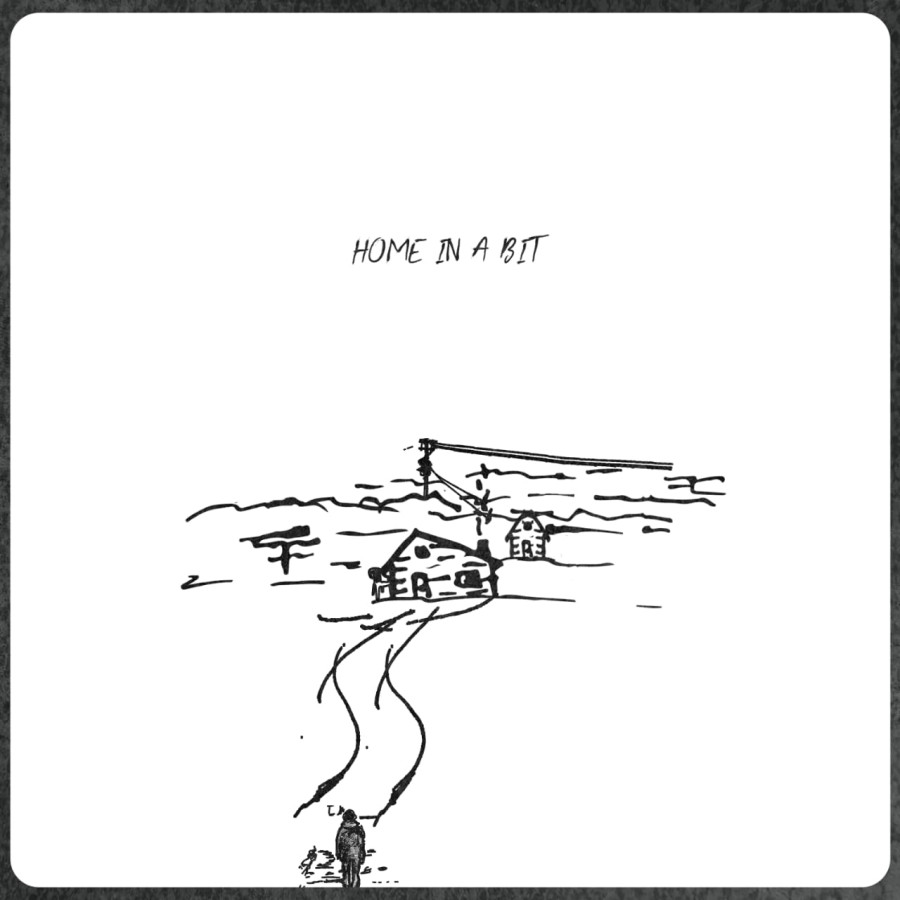
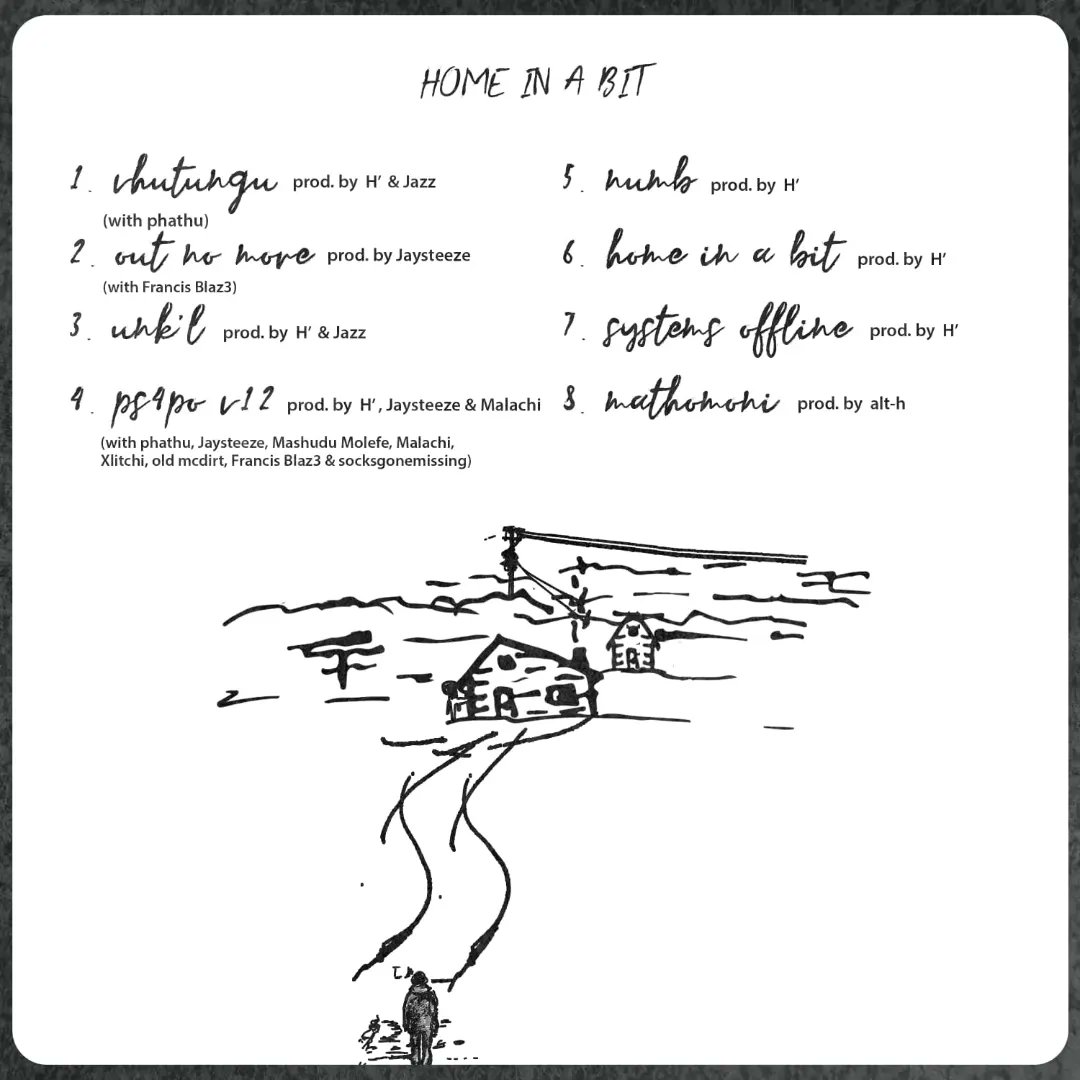
Opening with “vhuthungu”, the album sets the stage for its introspective journey. This track captures the essence of life’s bittersweetness within its melodies.
“out no more” serves as the core vibe, it has the characteristics of a catchy interlude, drenched in regret and loneliness.
“unk’l“ provides a moment of dark comic relief, injecting playful energy into the mix, the song strikes moods, melodies and cords reminiscent of Frank Ocean in his early days.
“ps4po v12” shines as a standout track, offering a moment of glory and radiance through a fat “Peace out” to what we assume to be a lost love.
“numb” reawakens deep emotions initially expressed in “vhuthungu”, tugging at the heartstrings as he convinces himself that he’s indeed numb from the heartbreak.
“Home In A Bit”, the album’s title track, speaks directly to the longing of the soul, conveying the universal need to move forward and find a sense of belonging.
“System’s offline” serves as the closing remark, leaving the listener with a lingering sense of introspection and contemplation as the Hermit seeks closure before he disconnects from the painful past.
Finally, “mathomoni” represents the beginning, symbolizing the cyclical nature of grief and the process of healing.
Personally, this album feels and sounds like a heart breaking in the city, bleeding all the way home to heal—a story that some of us are privileged enough to relate to.
Follow the H’ and Them and listen to the album below:
Music
Spotify Unveils DJ, the Personalized AI Guide That Takes Music Personalization to a Whole New Level

Are you tired of scrolling through playlists trying to find the perfect song for the moment? Look no further, because Spotify has got you covered! Their new feature, DJ, is here to make your music experience even more personalized.
This AI guide knows you and your taste in music so well, it’s like having a personal DJ in your pocket. It will scan the latest releases, sort through your old favourites, and even resurface songs you haven’t heard in years. The DJ will then deliver a stream of songs picked just for you, complete with commentary about the tracks and artists in a voice that sounds so realistic, you’ll think you’re chatting to a real-life music fanatic, or maybe listening to an episode of a Dissect podcast.
If you’re not really feeling the vibe that your playlist is serving you, just tap the DJ button and it will switch it up. The more you listen and provide feedback, the better its recommendations get. It’s like having your own personal music concierge!
SO HOW DOES IT WORK?
So how does this magical DJ work? Spotify uses its personalization technology to give you a lineup of music recommendations based on what they know you like. Then they added generative AI technology, which is put in the hands of their music editors to provide you with insightful facts about the music, artists, or genres you’re listening to. And the cherry on top? They even brought in a dynamic AI voice platform to bring the DJ’s commentary to life with stunningly realistic voices from text.
WHERE TO UNLEASH THE DJ?
Ready to have your own personal AI DJ guide your music journey? Good news! The DJ feature is now available in English for Spotify Premium users in the U.S. and Canada (Try using a VPN 😉). Here’s how to get started:
- Launch the Spotify mobile app on your iOS or Android device and head to the Music Feed on Home.
- Look for the DJ card and tap Play to start the personalized music experience.
- Let Spotify take over and curate a lineup of tracks with insightful commentary on the artists and songs, tailored specifically to your taste.
- Feeling like switching it up? Hit the DJ button located at the bottom right of your screen to explore different genres, moods, and artists. It’s that easy!
So what are you waiting for? Let the DJ be your guide to discovering new music and connecting with your favourite artists on a whole new level.
Music
A song was made and then we became: A conversation with Off The Med’s Lead vocalist Kid Khuthaza pt.1

I always seem to think that people who move and spend a few years overseas tend to forget their home language, slang, or pretty much the essence of where they came from, which is often if not always, not the case. This thought comes from earlier childhood memories of jokes made around celebrities who went to the states, spent a few weeks or months and came back with awkwardly heavy accents and a dodgy loss of expression in their mother tongue.
This interview was another reminder that people have grown more conscious and proud of their identity, especially when they are halfway across the world and away from home… the conversation begins as drizzles of small banter that begin to feel like we’ve just bumped into each other in a queue for a taxi, after years of no communication; “What are you doing up so late in the evening bro?” I ask with enthusiasm, “It’s not late, it’s 8 am here” he responds in a composed manner. I quickly realize that I am so frazzled that I am not aware of the time difference, which is the prime contributor to why we are having this interview about making music in a foreign land(#SoFarGone); I break into nervous laughter and get straight into it, “So I want to get get a bit into who you are and why you do what you do…” my eagerness is quickly curbed by the shuffling of what sounds like plastic packets and the clacking of dishes followed by his lackluster remark, “ Ima kancane, ngi sa seyenza something (Please hold on, I am still doing something)”, It turns out that he is preparing breakfast and that this interview is not about to become typical, but more personal and very close to home.

Kid Khuthaza carries the undeniable spirit of a love affair between a Rock star and a Hippy, with the dress sense of a retired Russian gangster living in Boksburg. He exudes an endless amount of confidence in his verses as well as when he commands a crowd who probably do not know what the hell he is saying. He is a proud member of Off The Meds a Swedish/South African group consisting of super producers Adrian Lux, Carli Löf and Måns Glaeser as well as him – vocalist/MC Kamohelo Khoaripe known by his stage name Kid Khutaza. The group formed by chance or fate if you will – all the way in 2017 which feels quite like yesterday considering how consistent they as a group have been over the years.
Kid Khuthaza is definitely a name to remember when imagining the sounds of tomorrow, his guttural voice coupled with his minimalist kwaito-styled verses resonate with the monotonous yet quick-witted streets of a South African township as well as the high energy and teen spirited nature of the alternative Swedish club scene.
“The guy I’m currently staying with now had an after-party down the road from the studio, a song was made and then we became.”
As I anxiously wait at the rare sight of a quiet night in the township, I make a quick and silent wish that we do not experience an unwelcome visitor in the form of Load shedding (Load shedding is aimed at removing the load from the power system when there is an imbalance between the electricity available and the demand for electricity often leading to hours of no electricity in various South African business and residential areas alike). I begin to think about how Kid Khutaza started creating as a photographer before delving into music.
I glance over my questions and try to formulate them in my head in the most natural way possible, and it becomes clear to me how important this conversation is to the culture, as I paddle frantically under the deep waters of over-preparing while adjusting my voice to mimic the gracious poise of a duck with water running off its back…in a few seconds he interjects, “Se ngi grand, I’m ready”

Is it pronounced Khuthatza or Khataza? – two words that have different meanings but are very synonymous in the hood. “You are the journalist, you should know” He responds with a much welcomed and smug sense of identity, “You can pronounce it however you want, it’s the same thing, it’s, however, you want it…that’s what I like about the name” he exclaims in isiZulu while he continues to eat in the background. We break into laughter as we talk about his bold move overseas and if he ever thinks about the moment he decided to fly out and start a new life, “I don’t think about the moment as much, it comes up here and there when people ask me or like once or twice a month at random times I’d be like f^@# there are only white people around me”.
It was amongst such company that 4 years prior to our interview he would meet soon to be, members of the Off The Meds. “The guy I’m currently staying with now” he calmly states, “had an after-party down the road from the studio, a song was made and then we became.”
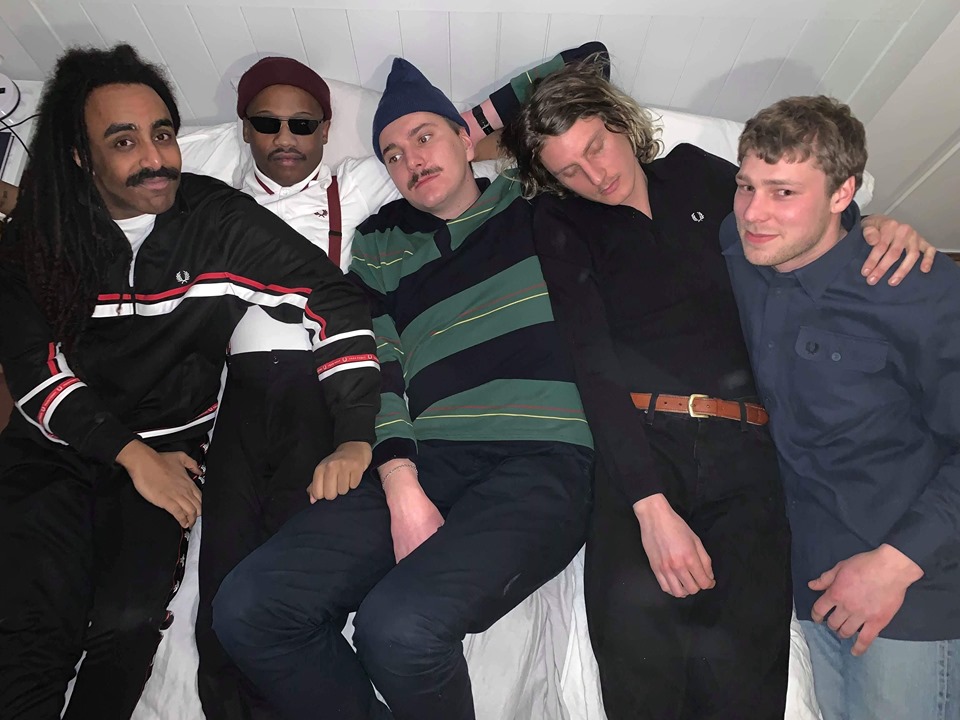
As we delve deeper, Khutaza delivers a heartfelt explanation of how they make and perform their tunes and it begins to become engrossingly evident how the inception of how the group met, melds into how their sound is formed, which in most cases is the result of them as friends having fun and seeing what music forms from that joy and ultimately where it takes them. “Everyone has their different influences, so we just get into the studio and blend it together then it just becomes an Off The Meds sound. It’s not a Swedish sound or South African sound it’s really just experimental, we just having fun”.
The coming together of these individuals has resulted in them performing at global music festivals. I began to wonder how he felt being jolted onto those stages and what he had gathered from being part of such experiences. “The first one was a bit big as well, a lot more weird than big; It was at an Absolut midsommar Festival and Kuli Chana was playing there as well, I bumped into him there and we spoke, I think someone must have told him about me or said that a guy from South Africa just came in (laughs) anyways it started raining and we couldn’t play on the main stage and we ended up playing under a tent, I was pretty nervous and it took me like 10 minutes to go on and perform. Every time they played the song, people expected me to jump on and I was like “no,no,no.”…eventually they just let it play and I just went on.”
My curiosity led me to enquire a bit more about whether he still gets these butterflies or it pretty much becomes like riding a bike. He maintains his assured tone in his response, “I still get a bit nervous, but it depends on the gig…I mean I still get a bit of social anxiety because we don’t plan our sets or rehearse, we just go there and just start playing…we play like a proper DJ set and there’s no “hey thanks for coming”, we just play and get off the stage. It’s like a DJ set, that’s how we do it because it’s really Dance music and I’m just trying to hype the people up, so there’s never really a plan or an order, they just play the music and I jump on and maybe sometimes they’ll play something different and I will just improvise.”

At this point in the conversation, it has become evident that Kid Khuthaza has found comfort in his identity in a foreign land and that his contributions have been well received by the Swedish audience as well as his band members, his responses are effortless, heavily loaded and yet so succinct, very similar to his delivery of verses and bars that he lays down for Off The Meds. His style of delivery is extremely reminiscent of that of a Kwaito .
Kid Khutaza pays homage to the genre through his raw minimalist delivery infused with jovial stories of everyday life laced on very experimental and alternative beats, I began to wonder if his style is premeditated or naturally a part of who he is; “It’s pretty easy for me to write monotonous lyrics, I’d do like an 8 bar and do the hook then repeat the 8 bar, which is very similar to how Kwaito is or how old school grime is. It makes it easier for people to get and then it’s easier for them to sing along. It’s the style of writing I prefer. I write about everyday things and things that happen around me.”
I’m not saying they copied it but they sort of followed that interest.
The history of Kwaito has been one so solid and rooted that it has been difficult for musicians to replicate or carry the flag as custodians of the genre, leading to most believing that the genre has met it’s painful end. It has however remained the soundtrack to our childhoods and thus birthed an evolution if you may of modern musicians who have, just like Khutaza, infused it into their sound to share with a global audience; this topic resonates with both of us as kids “running” the dusty streets of the hood in euphoria looking for the next adventure, stealing peaches, eating amakipkip and ice blocks while the reverberating bass lines and minimal lyrics in the far background play what would be the soundtracks to our youth and for him the impetus to what would become an integral ingredient in his music- I’m filled with so much passion and excitement as I ask: “Everybody is really trying to bring the Kwaito sound back, do you think it’s a beautiful thing or it’s one of those things that people should let go of?”, for the first time in the conversation his response begins with a slight hesitation, as if he is trying to piece the right words together in order to avoid conflict or being misunderstood about a very sensitive topic, he continues to respond “I think there’s a lot of people that are doing it and others who are trying to do it, I can personally reference people like Spoek, OKMalumKoolkat, BFG and Sandy B, but Sandy B has been doing it for a long time, and when Dirty Paraffin was coming out, their songs were Kwaito and they took a lot of influence from like bubblegum music and Euro Disco and Yeah, they done it but they got more hype overseas and once the guys from back home heard it, they tried to jump on it. I’m not saying they copied it but they sort of followed that interest.”
— End of part 1, follow us on social media IG: @kaffeinmagazine, Facebook and Twitter @Kaffeinmagazine or subscribe to receive the link to part 2 of this article when it drops—
-

 Fashion2 years ago
Glotto: A Journey of Cultural Storytelling Through Fashion
-
 Music2 years ago
Love and Marriage: Deciphering Riky Rick’s Forgotten Cinematic Album
-

 Events2 years ago
Capitec Handmade Africa: Redefining African Luxury with Garreth Van Niekerk
-

 News2 years ago
African Art Unveiled: RMB Latitudes Fair