Capitec handmadeAFRICA introduces its inaugural pavilion at Decorex Cape Town — reimagining luxury through innovation, craftsmanship and storytelling.
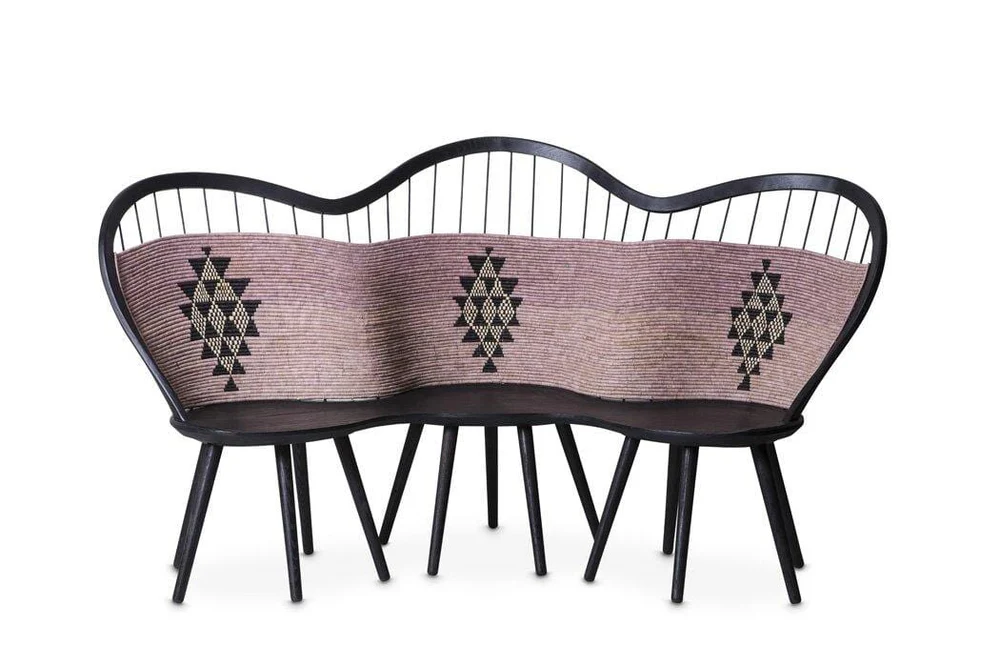
The first is the Capitec handmadeAFRICA Pavilion, which will showcase the work of African designers that the curators have carefully selected for their innovation and craftsmanship. Nestled within the vibrant halls of the Cape Town International Convention Centre from 5–8 June 2025, the pavilion is more than a display—it’s a celebration of a promising future for African creative talent.
At Decorex Cape Town, tradition meets contemporary vision in every piece. These designers are reshaping what luxury means, infusing every object with the soul of African craft and the energy of tomorrow. Whether it’s the kinetic wire sculptures that marry street-style aesthetics with digital precision, or the rich, tactile ceramics that echo the Namibian landscape, each work tells a story of place, ritual, and possibility.
Take, for example, the expressive works from:
African Robots & SPACECRAFT – where twisted wire forms cast moving shadows that evoke networks, memory, and code.
Xammi Namibia – with hand‑built ceramic pieces that honour womanhood and the raw textures of nature.
LRNCE – offering bold, hand‑painted ceramic plates that blend tradition with playful abstraction.
Roxas Functional Sculptures – everyday objects that speak with unexpected wit and poetic inscription.
Bambizulu’s Chela Broom – a reinvention of the familiar that celebrates daily ritual and sustainable design.
Luminaire d’Afrique – where lighting transcends mere function to become a narrative of collaboration and innovation.
Sylvester Zanoxolo Mqeku – whose sand‑cast ceramics echo geological time, transforming raw earth into artefacts of the future.
Each selected designer is a beacon of creativity, pushing boundaries while honouring heritage. The pavilion not only spotlights innovative craft but also serves as a bridge, offering insights into African culture for those far from its rhythms.
Why visit? Because these are just ten designers who we figured embody a future where luxury is defined by skill, sustainability and story. It’s an invitation to see art and design in action, a glimpse into a world where innovation meets tradition.
Details at a Glance:
Where: Decorex Cape Town, Cape Town International Convention Centre
When:5–8 June 2025
What: The Capitec handmadeAFRICA Pavilion — ten visionary designers redefining luxury through craft
Lethabo Ngakane is a writer, art director and entrepreneur. I love people, experiences and submerging myself in great content. My passion is to exchange and share emerging creative talent with the world.
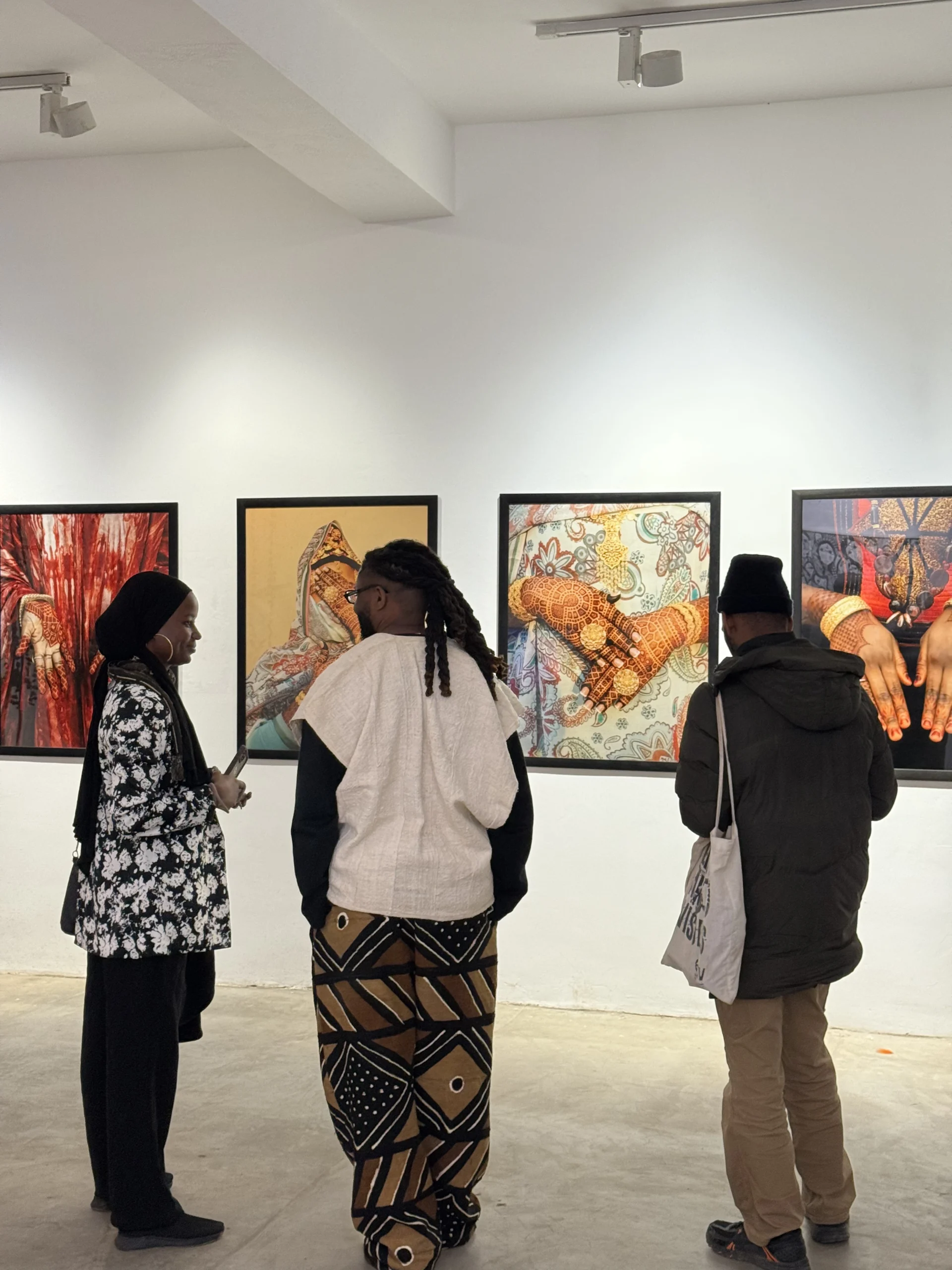
In the heart of Marrakech’s medina, where movement is constant and histories overlap, La Traversée unfolds as a quiet yet powerful meditation on passage, memory, and belonging. Presented at DADA Marrakech, the contemporary art exhibition brings together artists from Mali, West Africa, and the African diaspora, exploring what it means to move — across geographies, cultures, and inner landscapes.
Curated by Yiiri Creative as part of the Suntomoon Festival’s Marrakech edition, La Traversée positions art as a site of encounter: between past and present, between the intimate and the collective. Through photography, painting, installation, performance, and video, the exhibition invites viewers to reflect on identity, transmission, and the shared imaginaries that bind African worlds beyond borders.
What is La Traversée about, and how did the exhibition come into being?
La Traversée was born from a desire to open a dialogue between artists from Mali and Morocco. For me, it was important to create a space where conversations around identity, ideas, memory, and culture could naturally emerge.
Choosing to present the exhibition during the Africa Cup of Nations felt essential. The CAN brings people together from all over the world, and this moment allowed the dialogue to extend even further — to include our brothers and sisters from across the African continent and its diaspora. This is where my curatorial inspiration comes from: creating crossings between people, stories, and shared experiences.
La Traversée was conceived as a dialogue between identities, memories, and cultures across borders.
Can you tell us about DADA as a space, and why it was important to present La Traversée there?
DADA is one of the most important contemporary cultural spaces in Marrakech. It is a hybrid complex that brings together traditional and modern cuisine alongside some of the city’s most inspiring artistic experiences.
Its contemporary architecture makes it an ideal space for artistic expression. Presenting La Traversée there was the result of a strong partnership with Le 18 Marrakech, a cultural space located in the medina. Together, these spaces offered the perfect environment for a collective exhibition rooted in dialogue, exchange, and contemporary African creativity.
3. Cultural Context
For someone who has never been to Mali, how would you describe the country, its people, and its cultural spirit?
Mali is one of the most authentic countries in Africa. It is incredibly rich in culture, and its people are welcoming, warm, and joyful. Culturally, the country is very diverse, yet there is a strong sense of harmony between its different communities.
This diversity is not something that separates people — it is something that brings them together.
How would you describe the current artistic scene in Mali, and what is your vision for its future?
The Malian artistic scene is extremely diverse. You’ll find Western influences, African influences, and our own local codes coexisting. It is a very hybrid scene, constantly evolving.
My vision for the future is to create spaces where Malian and African artists can create, dialogue, and exchange with the world; spaces where their work can be seen, valued, and consumed globally, while they remain rooted at home, in Africa.
My vision is for African artists to engage with the world while remaining rooted at home.”
What is Yiiri Creative, and what inspired its creation?
Yiiri Creative is the platform through which I develop and present my curatorial work and creative projects. It was created as a space to support contemporary African creation, encourage dialogue, and build bridges between artists, cultures, and audiences across borders.
Where can people follow your work or learn more about your projects?
You can follow my projects and creative work through the Yiiri Creative platform, or directly on my social media:@Spiko_warrior. The Exhibition is on at DADA Marakech from 26 December to 17 January 2026.
With La Traversée, the act of crossing becomes both a personal and collective gesture; one shaped by memory, movement, and shared cultural resonance. Situated in Marrakech yet rooted in broader African narratives, the exhibition reminds us that art is not fixed to place, but carried through people, histories, and encounters.
In creating space for dialogue between Mali, Morocco, and the wider diaspora, La Traversée affirms the value of art as a living exchange — one that continues long after the crossing itself.
With La Traversée, the act of crossing becomes both a personal and collective gesture. One shaped by memory, movement, and shared cultural resonance. Situated in Marrakech yet rooted in broader African narratives, the exhibition reminds us that art is not fixed to place, but carried through people, histories, and encounters.
In creating space for dialogue between Mali, Morocco, and the wider diaspora, La Traversée affirms the value of art as a living exchange. One that continues long after the crossing itself.
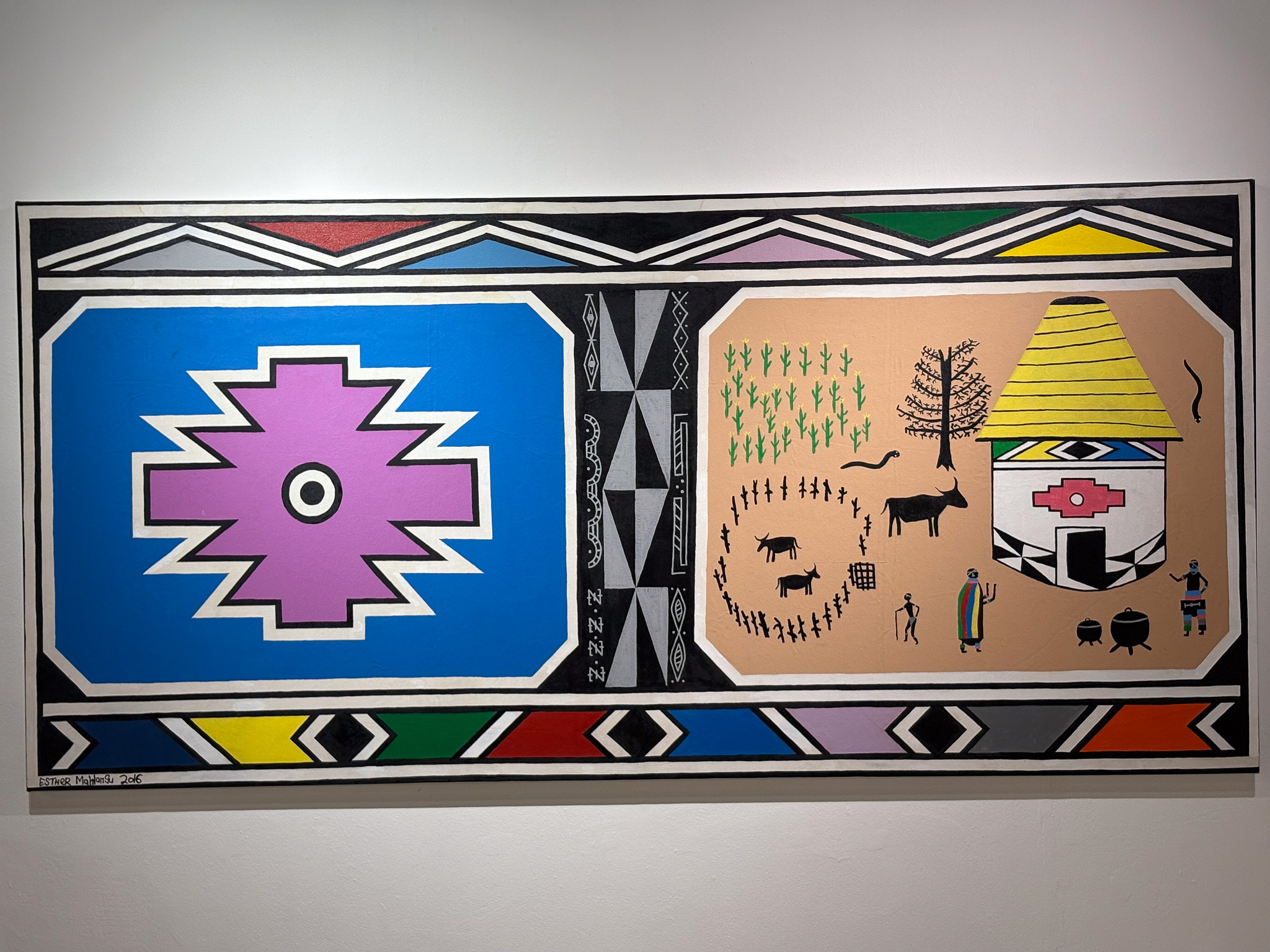
“As a child, I remember the glow on my mother’s face as we watched Dr. Esther Mahlangu on TV. She turned to me with wide eyes and said, ‘I met her once, you know.’ My mother, Ndebele, stood taller that day, as if the world was finally recognising the elegance and order of umgwalo—the Ndebele visual language of geometry, symmetry, and colour. For me, Dr. Mahlangu became a kind of myth made real—a quiet storm of brilliance.”
So, when I came across the exhibition curated by Mpumi Mayisa, aptly titled Hlukanisa, uHlanganise, at The Melrose Gallery, I was immediately intrigued. The phrase, which means “to deconstruct in order to reconstruct,” stirred something personal—a kind of emotional archaeology. It evoked a sense of rupture and restoration, a process all too familiar in the human experience: break it down to build again.
What truly drew me in was the promise of a “conversation” with Dr. Esther Mahlangu, a legend whose work has always spoken without words. I imagined myself standing in her presence, watching her balance silence with statement, paint with canvas, tradition with innovation. But upon arrival, I realised the dialogue wasn’t with her physically; it was unfolding through art. Her work had been placed in deep, thoughtful conversation with a new generation of bold, Black women artists.
And in that moment, I, too, had to hlukanisa and hlanganisa; dismantle my expectations and reconstruct an understanding of what this exhibition intended to express.
Deconstructing for Reconnection
Let’s try to explain this in terms we can all understand—beyond art speak and academic nuance. At its core, Hlukanisa, uHlanganise asks: What does it mean to take memory, tradition, or material apart, and use its fragments to create something new?
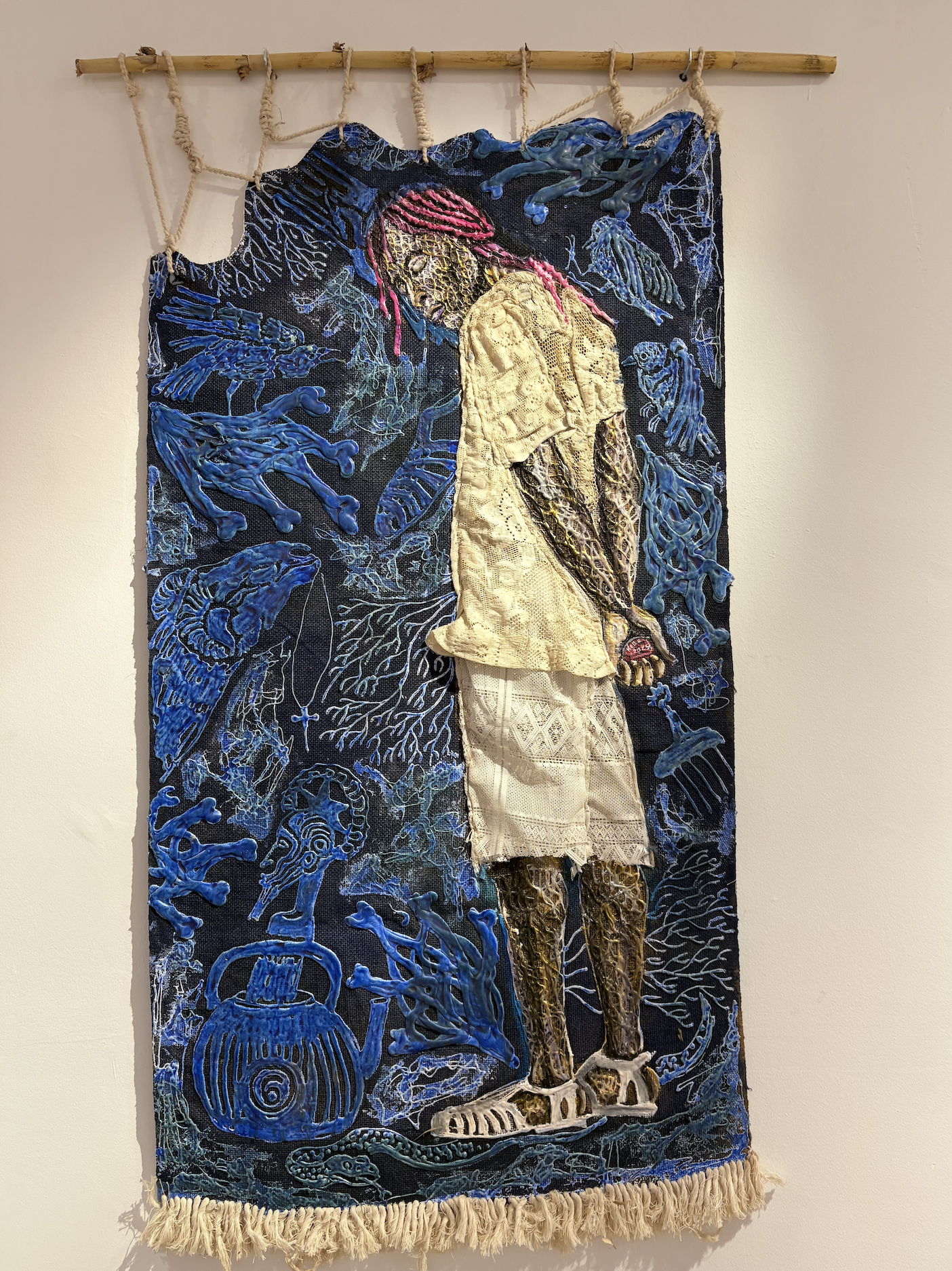
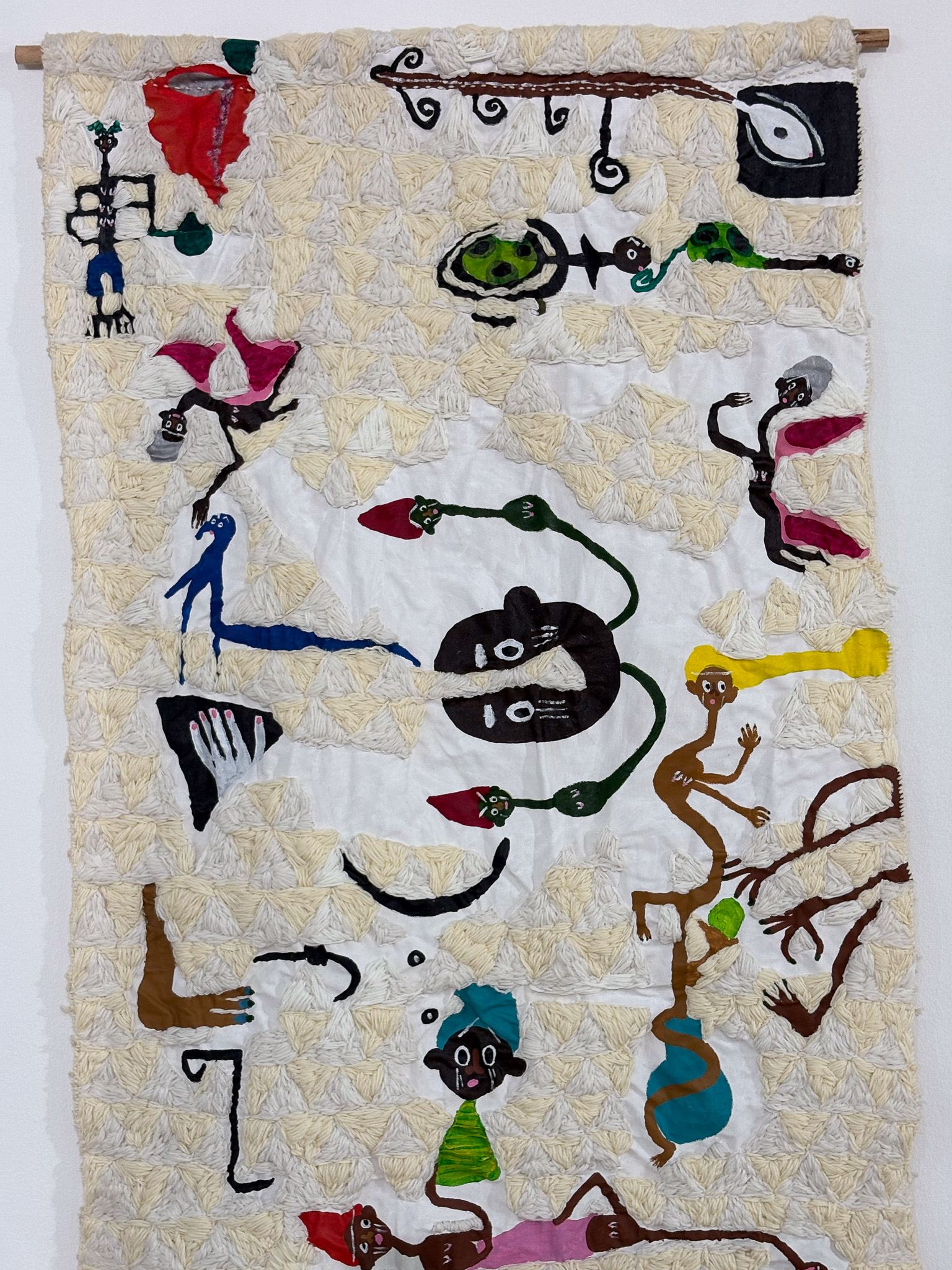
The exhibition features six Black women artists: Dr. Esther Mahlangu, Nwabisa Ntlokwana, Puleng Mongale, Tinyiko Makwakwa, Charity Vilakazi, and Nikiwe Dlova. Across mediums—beads, ochre, textiles, pigment; they engage with themes of memory, womanhood, and spirituality. Their work bridges the gap between the sacred and the lived, the past and the future.
This is not just about lineage. It’s about choice. What do we carry forward? What do we leave behind? Each piece contributes to an ongoing cultural conversation—inviting you, the viewer, to find your own interpretation in the tension between deconstruction and reconstruction.
Artist Spotlight: Charity Vilakazi and the Spirit of Amanono
During the exhibition walkabout, visual storyteller Charity Vilakazi waited until the room’s energy softened before speaking. Her presence was grounded, reflective. She shared:
“In conversation with Mpumi, when we spoke about ukuhlukanisa (to deconstruct) and uhlanganisa (to reconstruct), I told her how my journey into the arts began—by stepping into a matriarchal gaze. The matriarch as a vessel between the physical and spiritual realms. Everything kept leading me back to my childhood, which in turn led me into spirituality. That’s where I found the spirit within me—Amanono.”
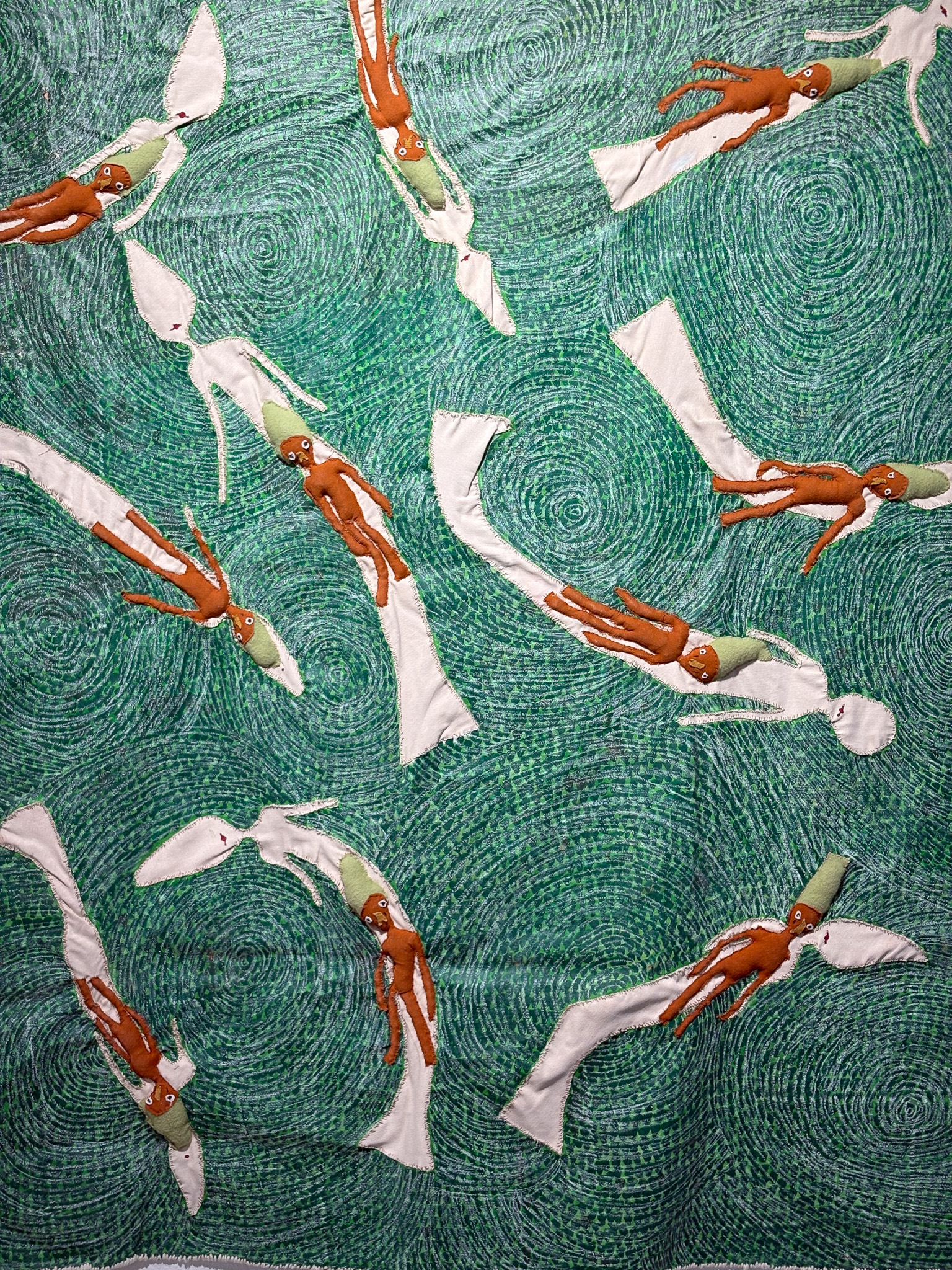
Her work was especially captivating. It had a surreal quality—populated by vibrant figures in exaggerated hats. At first, I mistook them for Elves, dancing between serenity and chaos. But these beings were not Elves—they were Amanono.
Among Nguni peoples, Amanono refers to children in the spiritual realm—babies or young children who passed away early. They exist in the ancestral plane between worlds. In Vilakazi’s work, these figures evoke presence, loss, playfulness, and power. Her canvas becomes a spiritual portal, a place where memory and myth live side by side.
Artist Spotlight: Nwabisa Ntlokwana and the Material of Motherhood
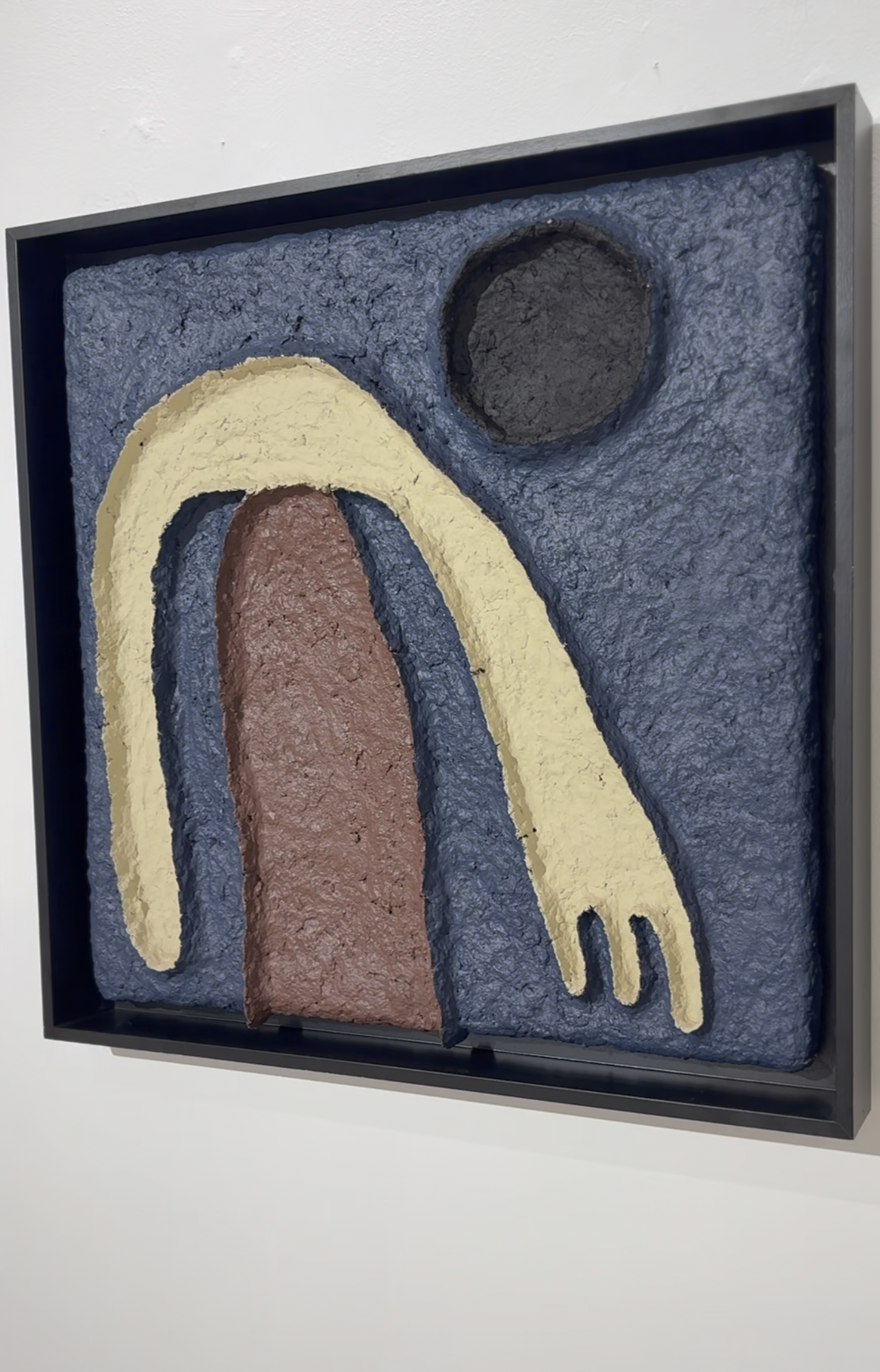
Sculptor Nwabisa Ntlokwana explored memory through texture, recycling cardboard and papier-mâché sourced from her community. She said:
“Papier-mâché reminds me of my younger self—school projects, playfulness. As a mother now, it helps me connect with my inner child. Using discarded materials reflects how I navigate motherhood: multitasking, managing mental health, leaning on community.”
The work is intentionally unpolished—raw, honest. It reflects collaboration, the many hands and hearts involved in raising children, and the imperfections that shape us.
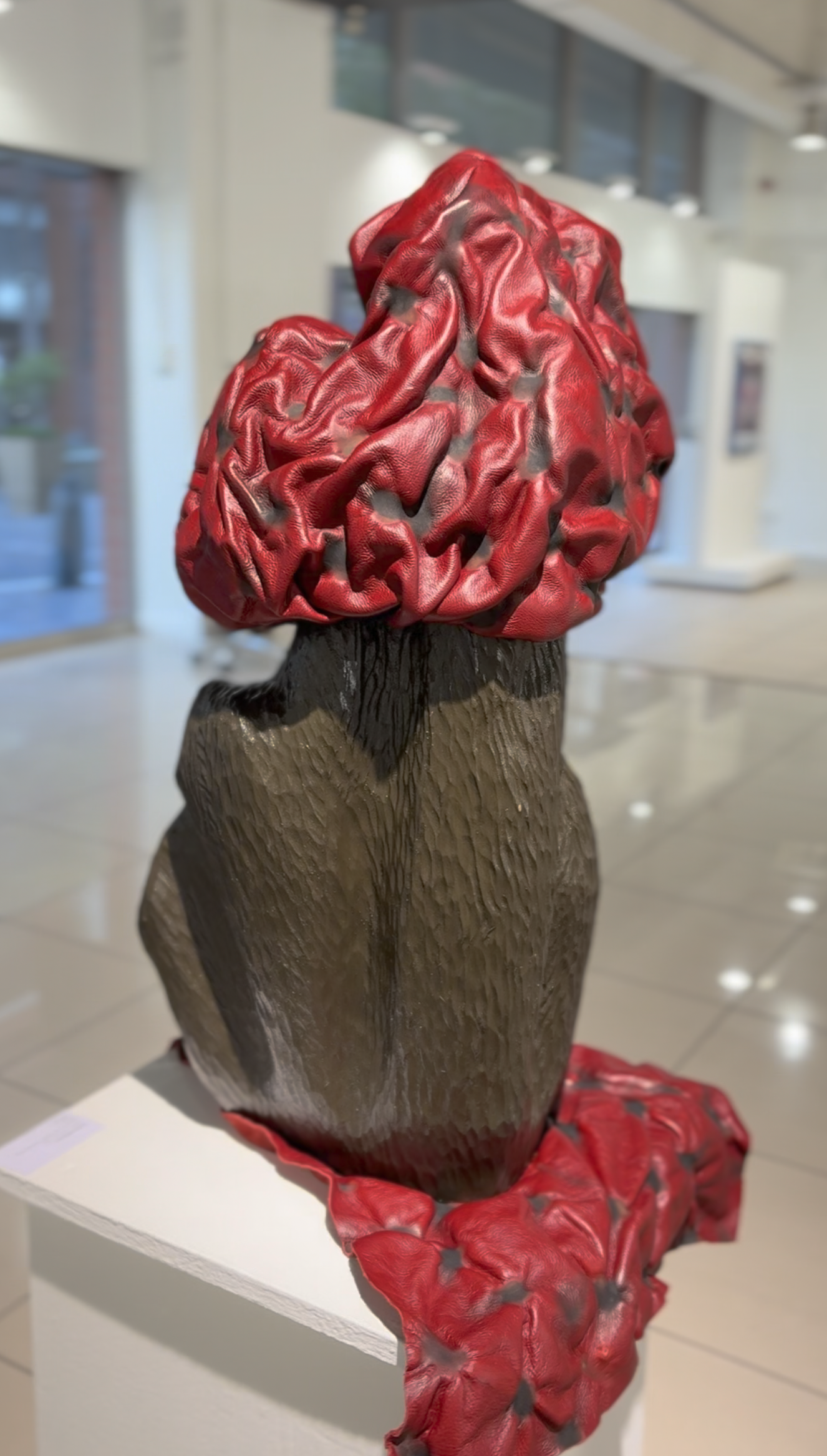
In another piece, Ntlokwana turned to leather, tapping into ancestral memory and the rituals of her Xhosa culture:
“When I tapped into leather, I was tapping into history. In our culture, we sacrifice inkomo (a cow) as a rite of passage. It’s a way to connect. I think I wanted to connect with my late mother.”
The work symbolises seeding—planting something and waiting for it to grow. The canvas was left open, unstructured:
“It represents a platform for the seed to grow in any direction it chooses. It’s also a symbol of pregnancy and the journey that comes with it. This piece felt like my child—I don’t want to limit him. I want him to grow into whoever he’s meant to be.”
Ntlokwana’s sculptures embody the exhibition’s core theme—breaking down familiar materials and cultural practices to build something more intimate: a narrative of becoming.
Final Reflections: Breaking to Build Again
As I left the gallery, I carried more questions than conclusions. Hlukanisa, uHlanganise is rich with meaning—but sometimes, its high-concept framing created a kind of distance. Still, perhaps that’s the point. Maybe the exhibition is asking us to not just deconstruct materials and memory—but to deconstruct how we interpret art altogether.
The central thread—a “conversation with Dr. Esther Mahlangu”—is not literal. It unfolds through symbols, colour, geometry, and texture. These six artists are not mimicking Mahlangu’s language; they are building on it, disrupting it, reimagining it. Some speak harmoniously. Others perhaps extend her legacy. All are in dialogue.
Visit the Exhibition
If you’re in Johannesburg before 25 May, visit Hlukanisa, uHlanganise at The Melrose Gallery. See how memory, womanhood, spirituality, and materiality are broken open—and stitched back together. You might find your own meaning hidden between the beads, textures, and layered stories waiting to be seen.









 Music3 years ago
 Tech3 years ago
 Fashion2 years ago
 Music2 years ago